020 71832792
 info@privatedoctor.london
Obstructive Sleep Apnoea: Combined Medical and Dental Care
Obstructive sleep apnoea (OSA) is a common condition in which the upper airway repeatedly becomes partially or completely blocked during sleep, causing disrupted breathing and fragmented rest. Left unaddressed, it can affect daytime alertness, concentration and long-term wellbeing. Managing OSA often involves more than a single approach — medical assessment is essential for diagnosis and treatment planning, while dental professionals can play an important role in evaluating suitability for certain oral appliances. Understanding how these two areas may complement each other can help people make more informed decisions. This article is educational in nature. Private Doctor London provides private testing and health-screening services and does not provide sleep apnoea diagnosis or treatment.
What Is Obstructive Sleep Apnoea?
During normal sleep, the muscles of the throat relax slightly while the airway remains open. In obstructive sleep apnoea, those muscles relax to the point where the airway narrows significantly or closes altogether. This interrupts breathing — sometimes for ten seconds or more — and the brain responds by partially waking the person to restore normal airflow. This cycle can repeat many times each hour without the person being fully aware of it.
Common symptoms associated with OSA include:
- Loud, habitual snoring
- Witnessed pauses in breathing during sleep
- Gasping or choking on waking
- Unrefreshing sleep despite adequate hours
- Excessive daytime sleepiness
- Morning headaches
- Difficulty concentrating during the day
- Repeated awakenings during the night
It is important to understand that experiencing one or more of these symptoms does not confirm a diagnosis of OSA. Symptoms can overlap with other conditions, and proper medical assessment — including appropriate sleep testing — is necessary to establish whether OSA is present and, if so, how severe it is. Anyone concerned about these symptoms should seek advice from an appropriate medical or sleep service.
How Do Medical and Dental Care Work Together for Obstructive Sleep Apnoea?
Medical professionals contribute to OSA care by assessing symptoms, arranging sleep investigations and establishing diagnosis and severity. Dental professionals may then assess whether a patient is suitable for an oral appliance, such as a mandibular advancement device, as an alternative or adjunct to treatment options like CPAP therapy. Treatment always depends on individual clinical assessment; no single approach suits everyone.
Medical and dental care may work together through:
- Medical assessment and appropriate sleep testing
- Evaluation of OSA severity
- CPAP therapy where clinically indicated
- Dental suitability assessment for oral appliances
- Customised mandibular advancement device fitting
- Ongoing medical and dental monitoring
Medical and dental professionals contribute different but potentially complementary expertise. A medical professional involved in sleep medicine is responsible for diagnosing OSA, determining its severity and recommending appropriate treatment. A qualified dentist with relevant training in dental sleep medicine may assess whether a patient's teeth, gums, bite and jaw health allow for safe oral appliance use.
Effective communication between these two areas — through appropriate referrals and shared clinical information — can support better treatment planning, help identify the most suitable approach for the individual and assist with monitoring over time. For information about dental services that may be relevant to oral appliance assessment, dental infection symptom guide provides a range of dental care options that may be worth exploring.
How Is Obstructive Sleep Apnoea Diagnosed?
Diagnosis begins with a thorough assessment of symptoms, relevant medical history and risk factors. A medical professional may consider factors including body weight, neck circumference, nasal and throat anatomy, and any coexisting health conditions.
Where OSA is suspected, appropriate sleep investigation is typically arranged. Home respiratory polygraphy — a portable monitoring device used overnight — is a commonly used investigation that records breathing patterns, oxygen saturation and related data during sleep. In some cases, more detailed in-laboratory sleep studies may be clinically indicated.
Based on the results, OSA is generally classified by severity using a measure called the Apnoea–Hypopnoea Index (AHI), which records the average number of breathing events per hour of sleep. This classification guides treatment decisions in line with current clinical guidance, including NICE NG202.
A dental examination alone cannot diagnose OSA. Any person who suspects they may have sleep apnoea should seek assessment through an appropriate medical or sleep service rather than approaching a dental provider first.
What Is the Role of CPAP Therapy?
Continuous Positive Airway Pressure (CPAP) is an established treatment approach for obstructive sleep apnoea, particularly for moderate to severe cases. A CPAP machine delivers a constant stream of pressurised air through a mask worn during sleep. This air pressure acts as a pneumatic splint, holding the airway open and preventing the collapse that causes breathing interruptions.
CPAP is recommended in NICE NG202 as the primary treatment option for adults with moderate or severe symptomatic OSAHS, alongside lifestyle advice. For those with mild OSAHS whose symptoms significantly affect daily life, CPAP may also be offered depending on individual circumstances.
Adherence can vary. Some people find mask comfort, air dryness or machine noise challenging in the early stages of use. Medical follow-up is important for adjusting settings, addressing practical difficulties and reviewing treatment effectiveness over time.
What Is a Mandibular Advancement Device?
A mandibular advancement device (MAD), sometimes referred to as a mandibular advancement splint (MAS), is an oral appliance worn during sleep. It is designed to hold the lower jaw in a slightly forward position, which helps to maintain space in the upper airway and may reduce the degree of airway obstruction.
MADs are available in different forms. Customised devices are made from impressions of the individual's teeth and are adjusted to the appropriate degree of jaw advancement. Semi-customised devices offer some degree of personalisation but are not fully bespoke. Customised appliances are generally preferred for clinical use in OSA management.
It is important to understand that a standard sports mouthguard or a night-time bruxism guard is not the same as a medically appropriate mandibular advancement device. These devices are not designed or validated for treating OSA and should not be used for this purpose.
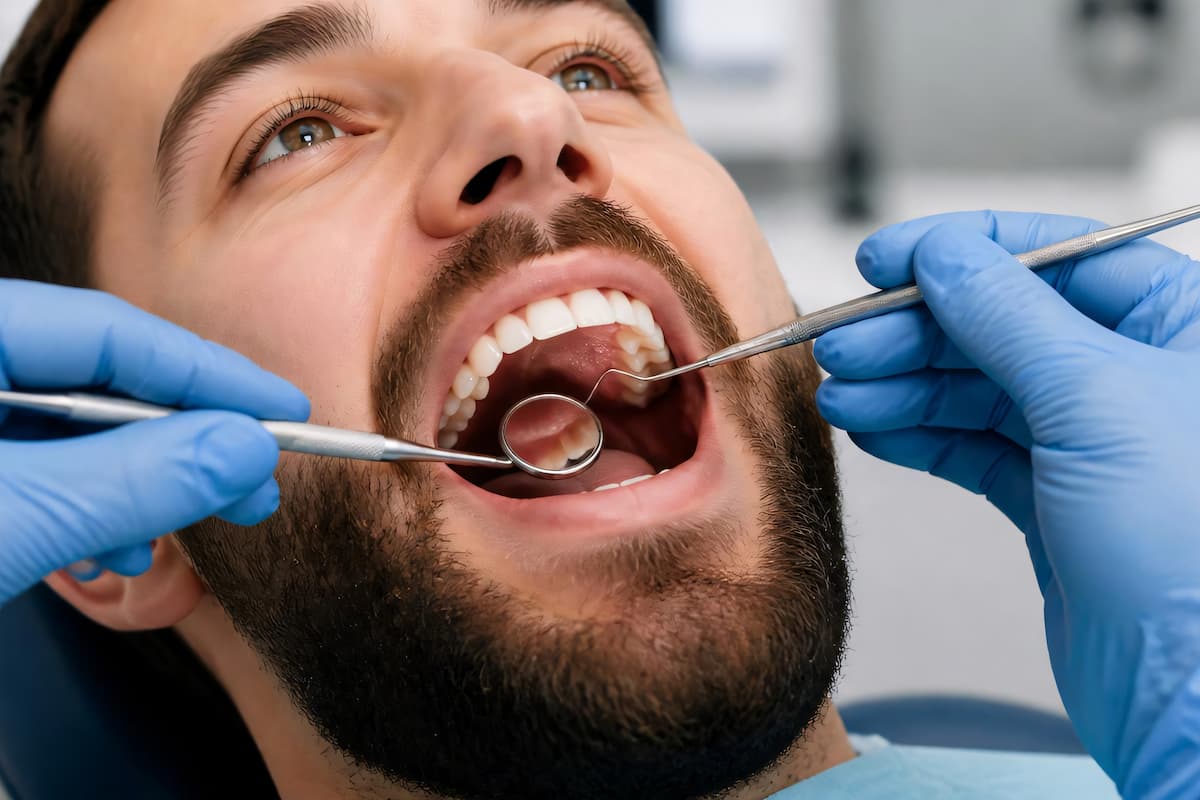
Before a MAD is provided, a qualified dentist with relevant training in dental sleep medicine should assess the patient's dental and periodontal health. A sufficient number of healthy teeth, adequate gum health and appropriate jaw function are all relevant factors. For people considering a dental assessment in this context, it may be helpful to explore overview of dental examinations to understand what a dental consultation might involve.
CPAP vs Mandibular Advancement Devices
The table below outlines some key differences between these two approaches. It is not intended as a treatment recommendation.
Why Is Dental Health Important Before Using an Oral Appliance?
Dental health plays a central role in determining whether an oral appliance is a safe and appropriate option for a given individual. A dental assessment would typically consider:
- The number, condition and stability of existing teeth
- Gum health and the presence of any periodontal disease
- The condition of any existing dental restorations
- Bite alignment and jaw joint function
- Any history of jaw pain or temporomandibular joint problems
Using a mandibular advancement device when underlying dental problems exist may worsen those problems or cause new ones. Even in people with good dental health, appliance use can cause changes in bite alignment or jaw discomfort over time, particularly in the early period of use. This is why ongoing dental monitoring — not just initial fitting — is an important part of responsible oral appliance provision.
Why Is Ongoing Monitoring Important?
Whether a person uses CPAP, an oral appliance or a combination of approaches, regular monitoring is an important part of long-term OSA management. Monitoring may involve:
- Reviewing symptom change and treatment adherence
- Assessing CPAP effectiveness through machine data or follow-up sleep testing
- Reviewing the fit and position of a mandibular advancement device
- Identifying and managing dental or bite-related side effects
- Reassessing treatment as individual circumstances change
Obstructive sleep apnoea can change over time, particularly in relation to weight or other health factors. Treatment that is working well at one point may need to be reviewed or adjusted later. This underscores the importance of maintaining contact with both medical and dental professionals as appropriate, rather than treating OSA as a one-time intervention. For further context on what dental involvement in sleep apnoea care might look like, the expected dental appointment workflow provides accessible information about their dental approach.
Who May Benefit from a Combined Approach?
Not everyone with obstructive sleep apnoea requires involvement from both medical and dental professionals simultaneously. The need for a combined approach depends on individual clinical circumstances, the severity of OSA, treatment preferences and dental suitability.
People who cannot tolerate CPAP, or who choose not to use it after appropriate discussion with their medical team, may be considered for a mandibular advancement device — provided they meet the relevant clinical and dental criteria. In such cases, the medical professional establishes the diagnosis and severity, while a dental provider assesses suitability for appliance provision and manages the fitting and follow-up.
It is also worth noting that lifestyle measures — including weight management where clinically relevant, reducing alcohol consumption, avoiding sedatives and, in some cases, positional treatment — can support OSA management alongside other approaches and are typically discussed as part of a comprehensive treatment plan.
For patients with acute night-time discomfort while awaiting planned assessment, emergency wisdom tooth care guidance offers additional practical context.
Frequently Asked Questions
Can a dentist help treat obstructive sleep apnoea?
A qualified dentist with relevant training in dental sleep medicine can assess a patient's suitability for a mandibular advancement device and manage the fitting and follow-up. However, a dental professional cannot diagnose OSA. Diagnosis requires medical assessment and appropriate sleep testing through an accredited sleep service.
Is a mandibular advancement device an alternative to CPAP?
In some circumstances, yes. NICE NG202 indicates that an oral appliance may be considered for adults who cannot tolerate or decline CPAP, subject to appropriate dental suitability. For moderate or severe OSAHS, CPAP remains the recommended first-line treatment. The two approaches are not equivalent for all patients.
Can a dental mouthguard stop sleep apnoea?
No. A standard sports mouthguard or bruxism guard is not designed or validated for treating OSA. Only a clinically appropriate, correctly fitted mandibular advancement device — provided through an appropriately qualified dental professional following medical assessment — may be considered as part of OSA management.
Do I need a sleep study before getting a dental appliance?
Yes. A sleep study or appropriate sleep investigation is necessary to confirm a diagnosis of OSA and determine its severity before any treatment decision is made. A dental professional should not provide an oral appliance for OSA without evidence of a prior medical assessment and diagnosis.
Can a mandibular advancement device change my bite?
It can. Changes in bite alignment are a known potential side effect of mandibular advancement device use, particularly with long-term wear. Regular dental monitoring helps to detect and manage any bite-related changes. This is one reason why professional fitting and ongoing follow-up are important.
Why do medical and dental professionals need to work together?
OSA assessment and diagnosis fall within the scope of medical and sleep medicine practice. Dental assessment and oral appliance provision fall within the scope of appropriately trained dental professionals. Where both are involved in a patient's care, good communication — including appropriate referral letters, shared records and coordinated follow-up — supports safe, effective and individually appropriate treatment.
Finding Appropriate Medical and Dental Care
If you are experiencing symptoms that may suggest obstructive sleep apnoea — such as habitual snoring, daytime sleepiness, witnessed breathing pauses or unrefreshing sleep — the appropriate first step is to seek assessment through a medical or sleep service. A diagnosis must be established before any treatment is considered.
If, following medical assessment, an oral appliance is identified as a potentially suitable option, a dental provider with relevant experience in dental sleep medicine should conduct a thorough assessment of your dental and periodontal health before proceeding.
Private Doctor London provides private blood tests, health screening, sexual health testing and allergy testing. It does not provide sleep apnoea diagnosis, sleep studies or sleep apnoea treatment. People with symptoms suggestive of obstructive sleep apnoea should seek assessment through an appropriate medical or sleep service.
Disclaimer
This article is for educational information only and does not provide diagnosis or treatment. Any symptoms, test results, or treatment options should be reviewed with an appropriately qualified clinician or dentist. Individual suitability and outcomes vary, and urgent symptoms require immediate professional assessment. If you have severe or emergency symptoms, call 999 or attend A&E where appropriate.
Written Date: 13 November 2026 | Next Review Date: 13 November 2027